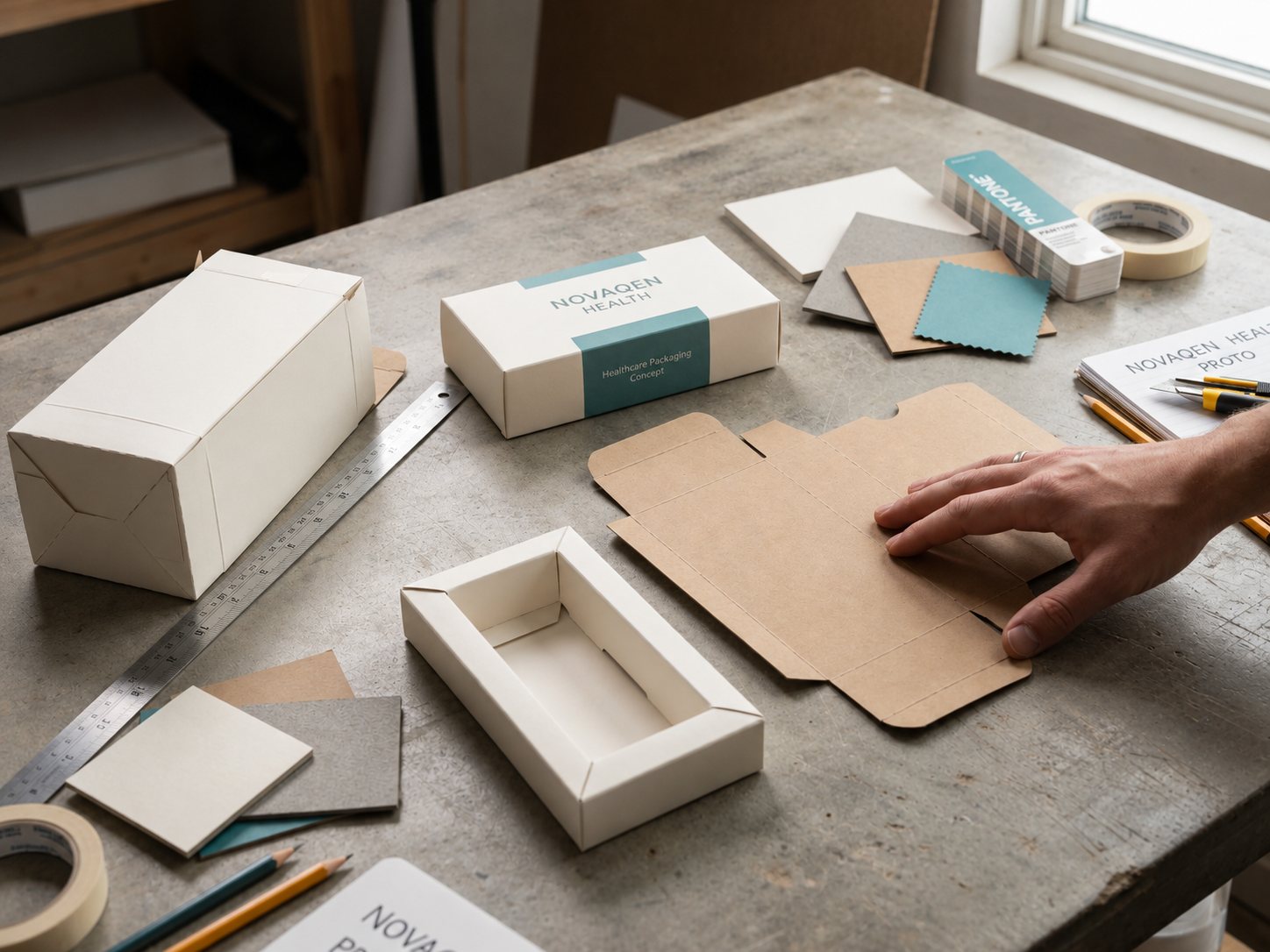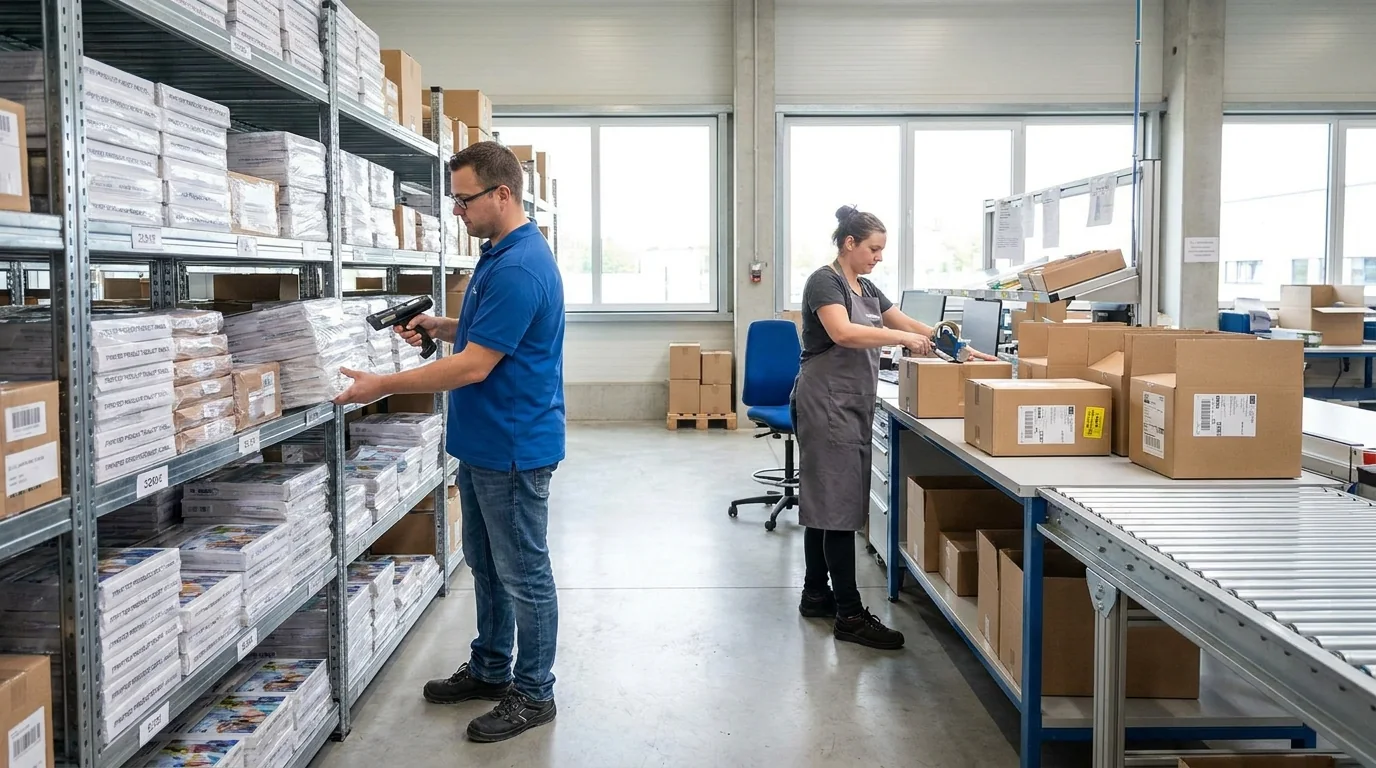
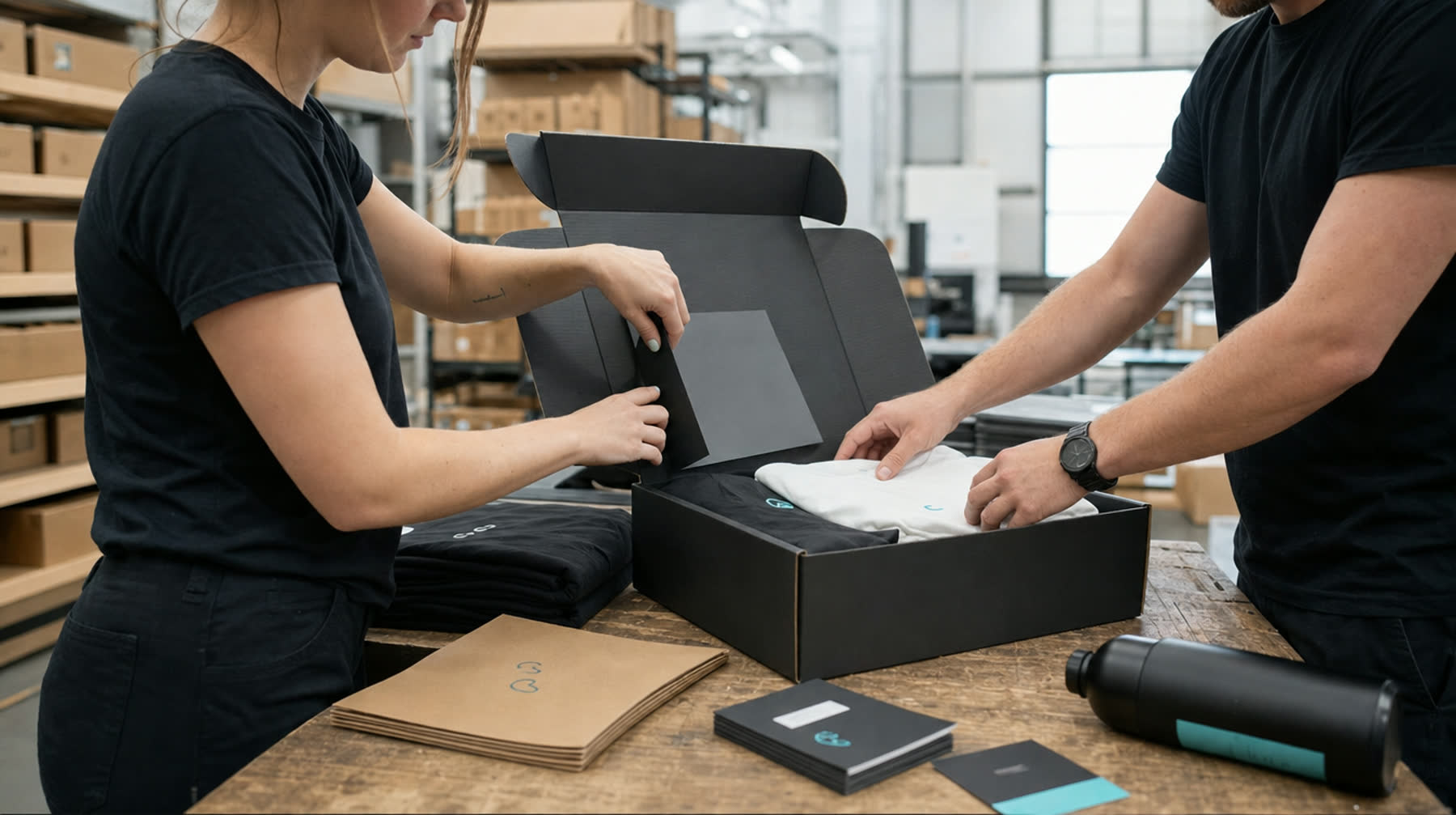
Most merchandise briefs arrive as a product name and a deadline. That is enough to get a price, but not enough to get the right recommendation. A short brief that covers audience, quantity, timing and destination lets a production partner compare routes rather than quote the first thing that fits.
Start with the audience, not the product
Who receives the item, and where are they when they receive it? A conference delegate carrying a bag home on a train has different needs to a dealership customer opening a pack at a desk, or a field sales team restocking from a stored position. Describe the moment of handover and the product shortlist usually narrows itself.
Give quantities as a range if you do not know
Minimum order quantities, decoration set-up and freight all move with volume. An honest range — say 250 to 1,000 — is far more useful than a single guessed figure, because it lets someone show you where the price breaks sit and whether a phased call-off makes more sense than one large delivery.
Be specific about dates and destinations
Separate the date the stock must exist from the date it must arrive. Bespoke production, overseas sourcing and multi-site distribution all have different lead times, and knowing whether items ship to one address, many sites or international destinations changes both the product choice and the packing.
Say what you do not want
Exclusions are as useful as requirements. If single-use plastic is out, if the item must be recyclable, if a previous product disappointed, say so early. It saves a round of proposals nobody needed to write.
Expect questions back
A good response should challenge parts of the brief: a lower quantity of a better item, a different decoration method, a delivery split that avoids storing stock you cannot use yet. If nothing comes back but a price list, the brief is being processed rather than read.