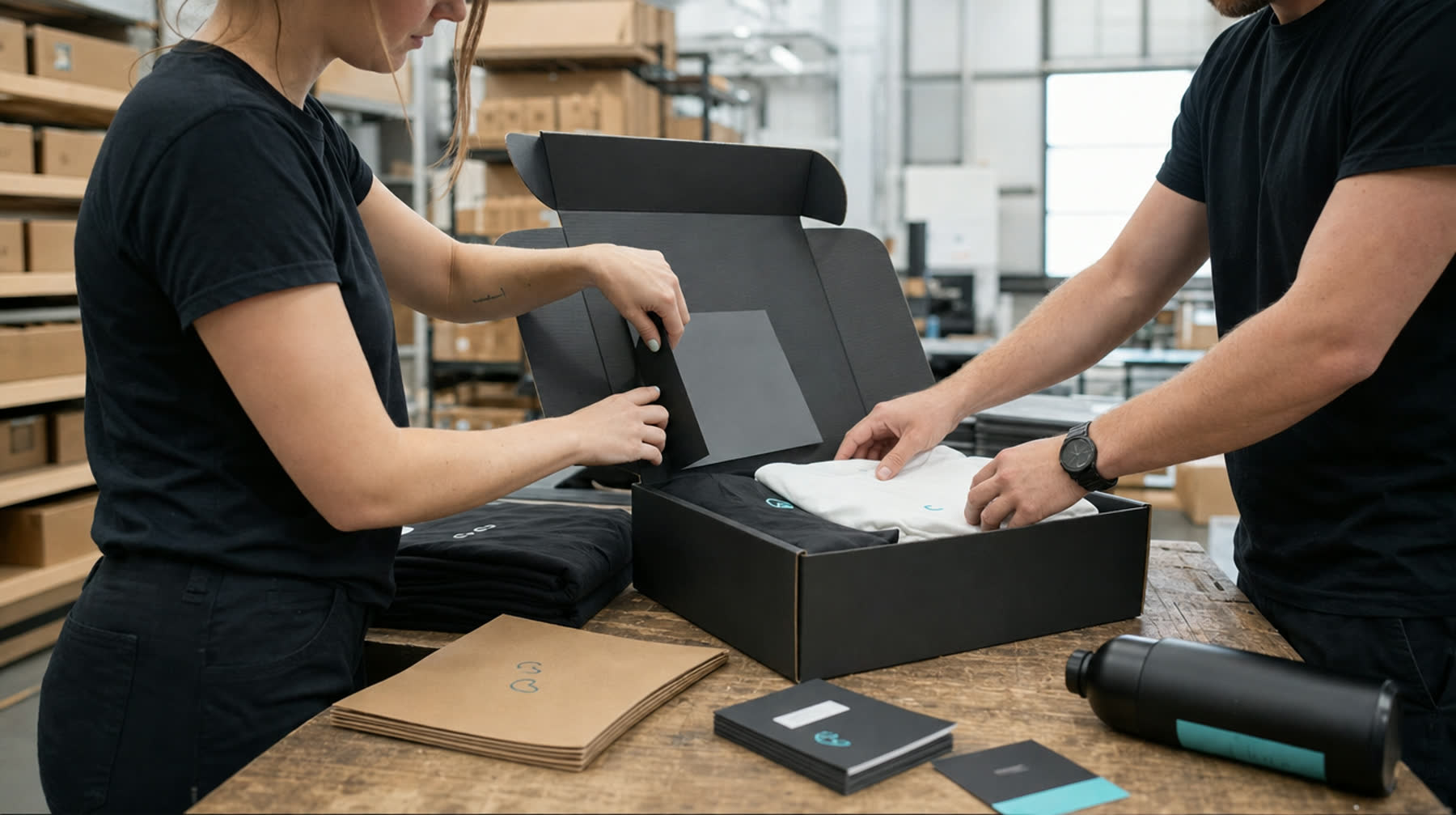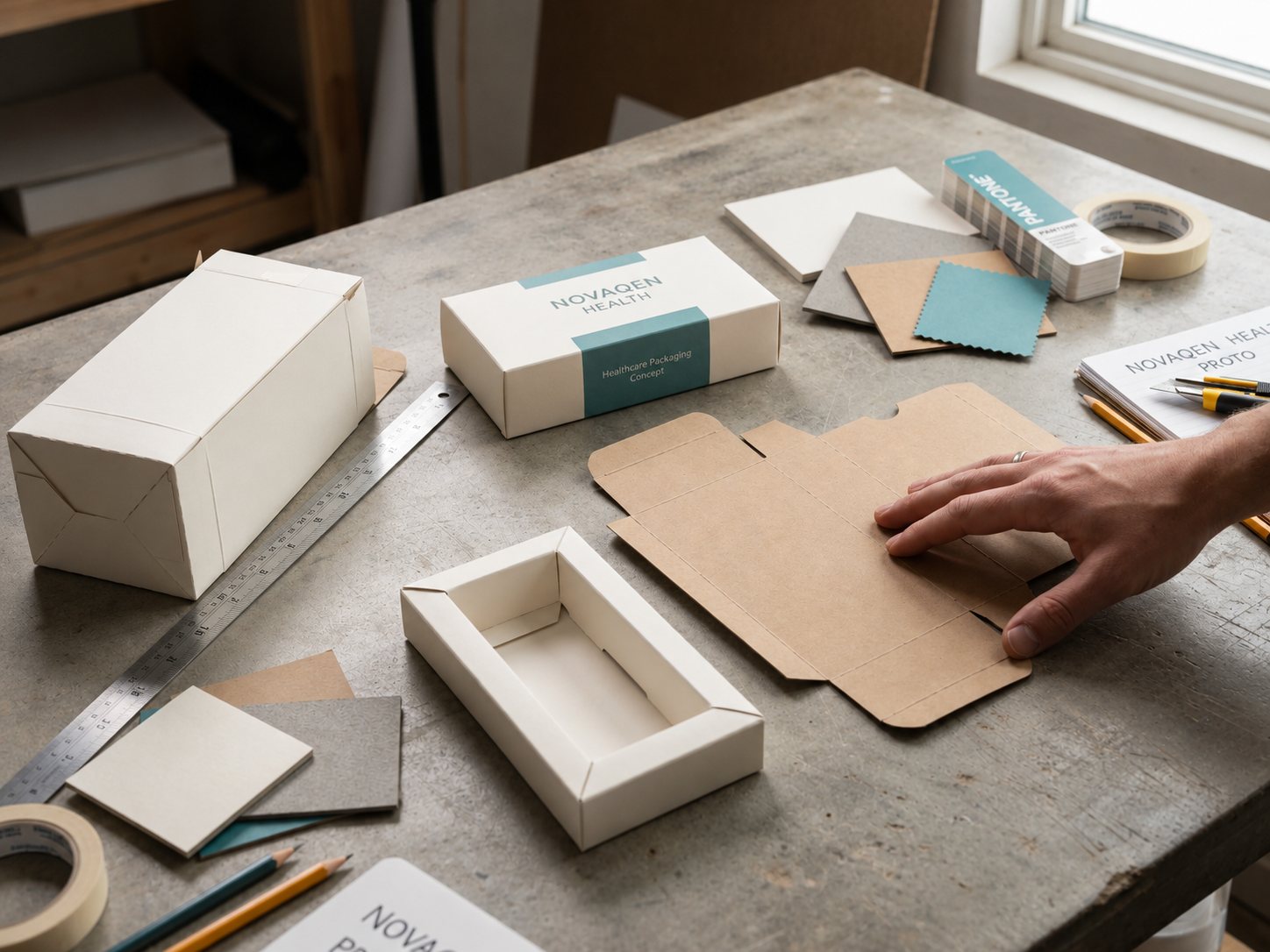
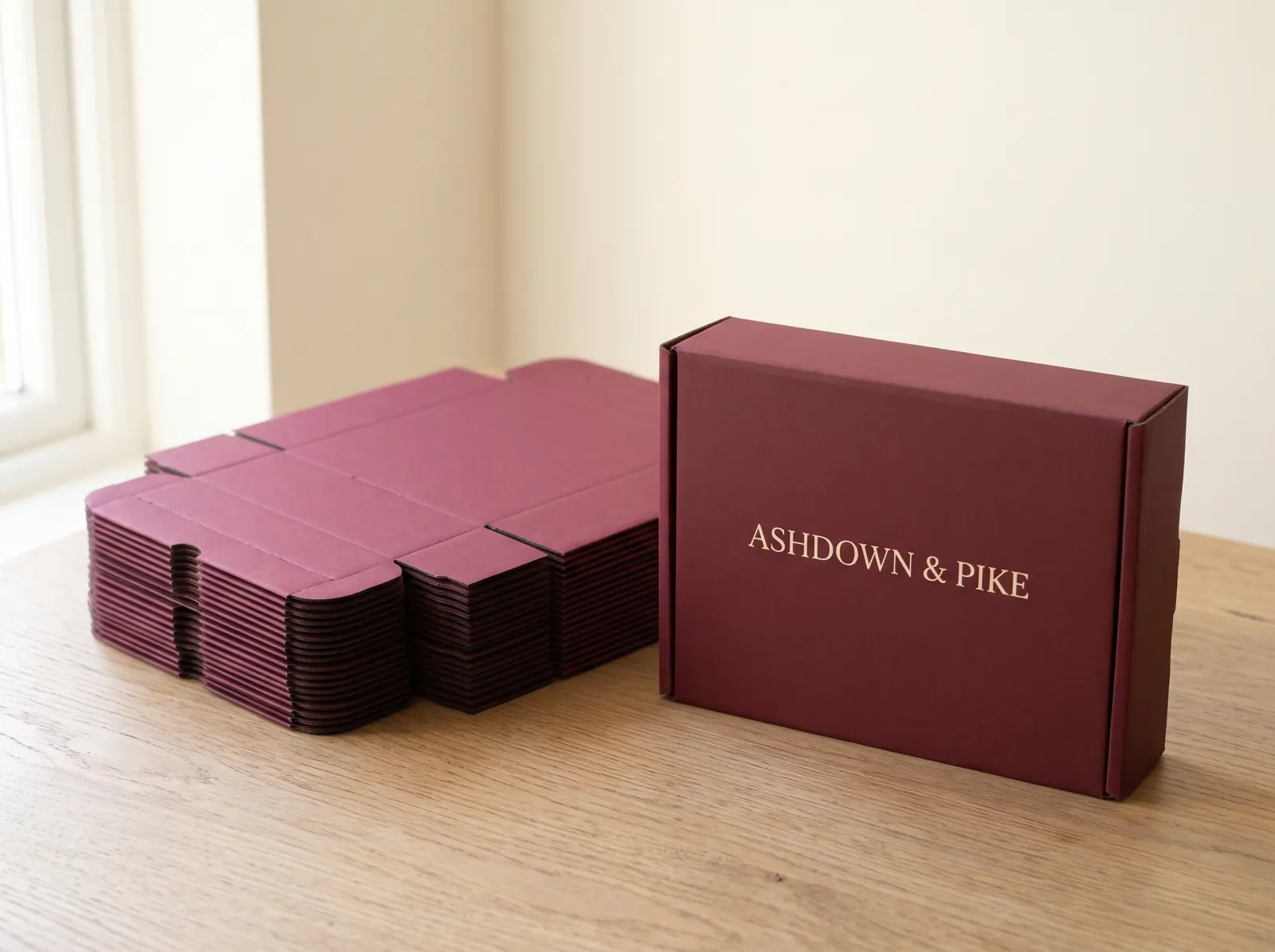
Presentation boxes come in two broad constructions. A rigid box is thick board wrapped in printed or coloured paper, made to its finished shape. A folding box is printed board that is cut, creased and supplied flat, then assembled at packing. Choosing between them is less about which looks better and more about how the box will be used, stored and sent.
What a rigid box gives you
Rigid boxes feel substantial the moment they are picked up. The walls don't flex, lids sit with a satisfying drag, and closures such as magnets, hinged lids and drawers are straightforward to build in. They suit products where the box is part of the gift: launches, awards, premium handovers and anything the recipient is likely to keep.
The trade-offs are space and handling. Rigid boxes arrive at their finished size, so a few hundred of them take up real storage and freight volume, and each one is usually assembled by hand.
What a folding box gives you
Folding boxes ship and store flat, which keeps freight and storage costs down and makes them practical for bigger runs. Good board, print and finishes mean a folding box can still look sharp, and a printed sleeve or belly band adds a layer of presentation without changing the structure.
They give less of the weighty, keepsake feel of rigid board, and the closure options are more limited, though tuck-ins, crash-lock bases and window panels all work well.
Using both in one campaign
Many projects don't need to choose. A rigid box for senior clients or key partners and a matching folding box for the wider list keeps the brand consistent and puts the budget where the impression matters most. Printing both from the same artwork and colour references keeps them looking like a family.
Prototype before you commit
Whichever route you take, a plain sample made to size answers the questions a render can't: how the lid feels, whether the insert holds, and how the product sits when the box opens. Finishes such as foil and embossing are best specified once the structure is signed off.